On this page you can find information that will help you plan your journey to the CS4Water Conference 2027 in Cape Town, South Africa, from 29 June to 1 July 2027. We will add details as they are confirmed, so check up regularly for updates.
Jump to: At a glance | Key dates | Venue | Visiting Cape Town | Getting around | Staying safe | Where to stay | Visas and entry | Cancellation and refunds | FAQs
The conference at a glance
| Item | Details |
|---|---|
| Dates | 29 June to 1 July 2027 |
| Venue | Emeris Newlands Campus, The Quadrant Building, 146 Campground Road, Newlands, Cape Town, 7700, South Africa |
| Format | Three days, fully in person |
| Language | English |
| Submissions and registration | Through the CS4Water Conference 2027 Dryfta platform [link will be available soon] |
| Contact | info@cs4water.net |
Key dates
| Milestone | Date |
|---|---|
| Call for contributions opens | 31 October 2026 |
| Submission deadline | 14 December 2026 |
| Acceptance decisions issued | 1 February 2027 |
| Early bird registration opens | 1 February 2027 |
| Draft outline programme released | 15 February 2027 |
| Early bird registration closes; regular registration opens | 5 March 2027 |
| Regular registration closes | 3 May 2027 |
| Late registration closes | 8 June 2027 |
| Full programme released | 10 June 2027 |
| CS4Water Conference 2027 | 29 June to 1 July 2027 |
Venue: Emeris Newlands Campus
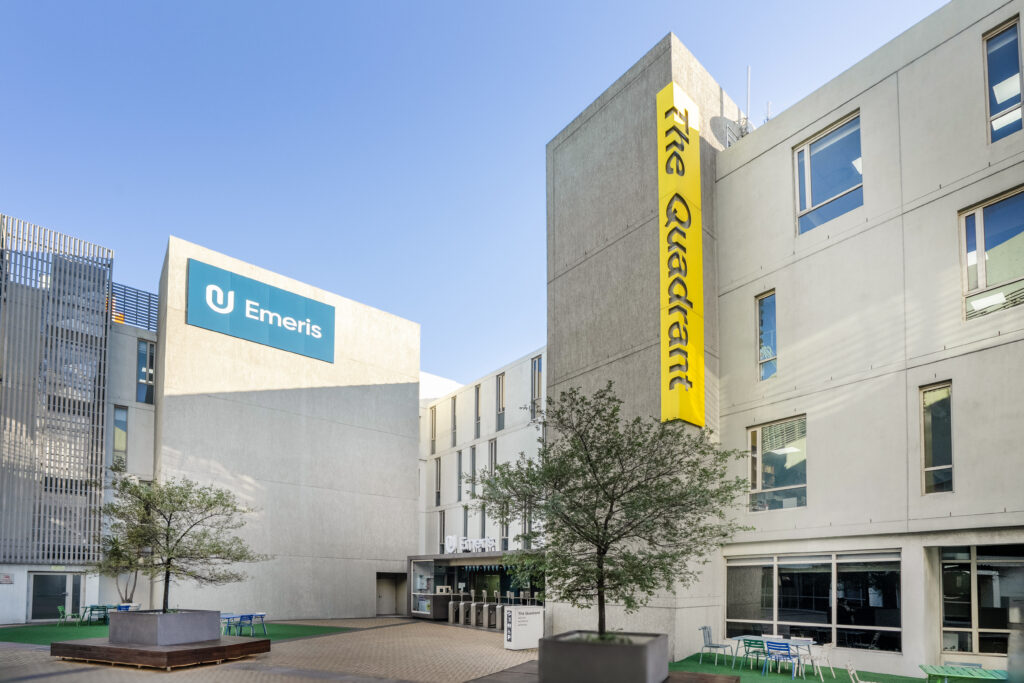
Emeris, a South African higher education institution and one of the conference co-organisers, hosts the CS4Water Conference 2027 at its Newlands Campus in Cape Town’s Southern Suburbs. The full programme runs on the sixth floor of The Quadrant Building, with views over the city. Sessions, the exhibition, tea breaks, and lunches all take place on this one floor, so delegates stay together throughout the three days.
Newlands lies beneath the eastern slopes of Table Mountain, close to the Newlands rugby and cricket grounds and a short drive from Kirstenbosch National Botanical Garden, the University of Cape Town, and the shops and restaurants of neighbouring Claremont.
Getting to the venue
Cape Town International Airport (CPT) lies about 17 km to 20 km from the venue, a drive of roughly 20 to 60 minutes depending on traffic. The city centre is a similar drive away. Weekday morning and evening peak traffic can double journey times, so please allow extra time to arrive for the opening plenary each morning.
Delegates have secure parking on the Emeris campus. We also recommend using Uber or Bolt as e-hailing drop-off services for travel throughout Cape Town, which is reliably available from the airport and across most of the city.
Accessibility
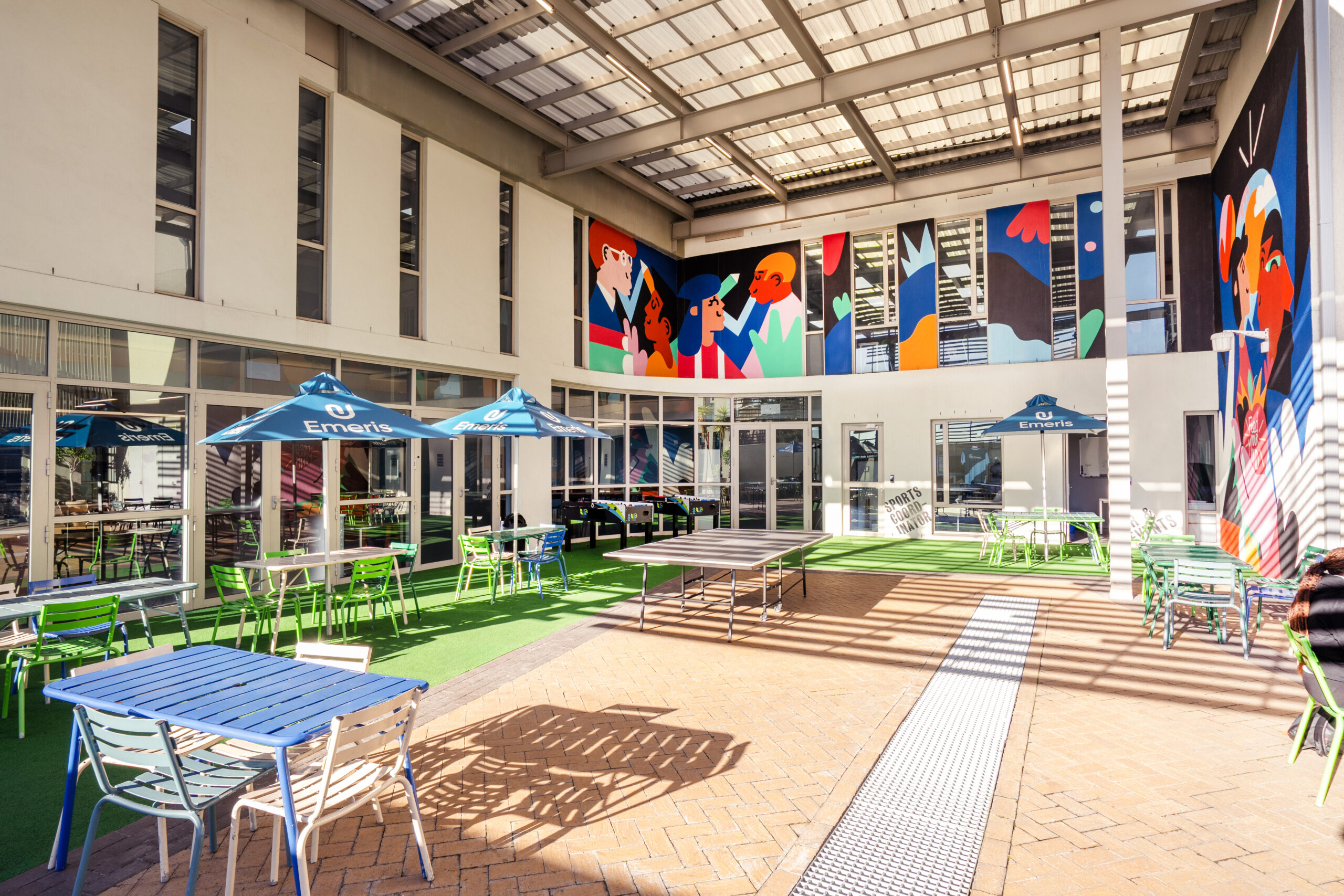
The Emeris Newlands Campus and the sixth-floor conference venue are wheelchair accessible, with lifts serving the sixth floor. Please tell us about any accessibility requirements when you register, or contact info@cs4water.net at any time, so that we can make suitable arrangements.
Visiting Cape Town in winter
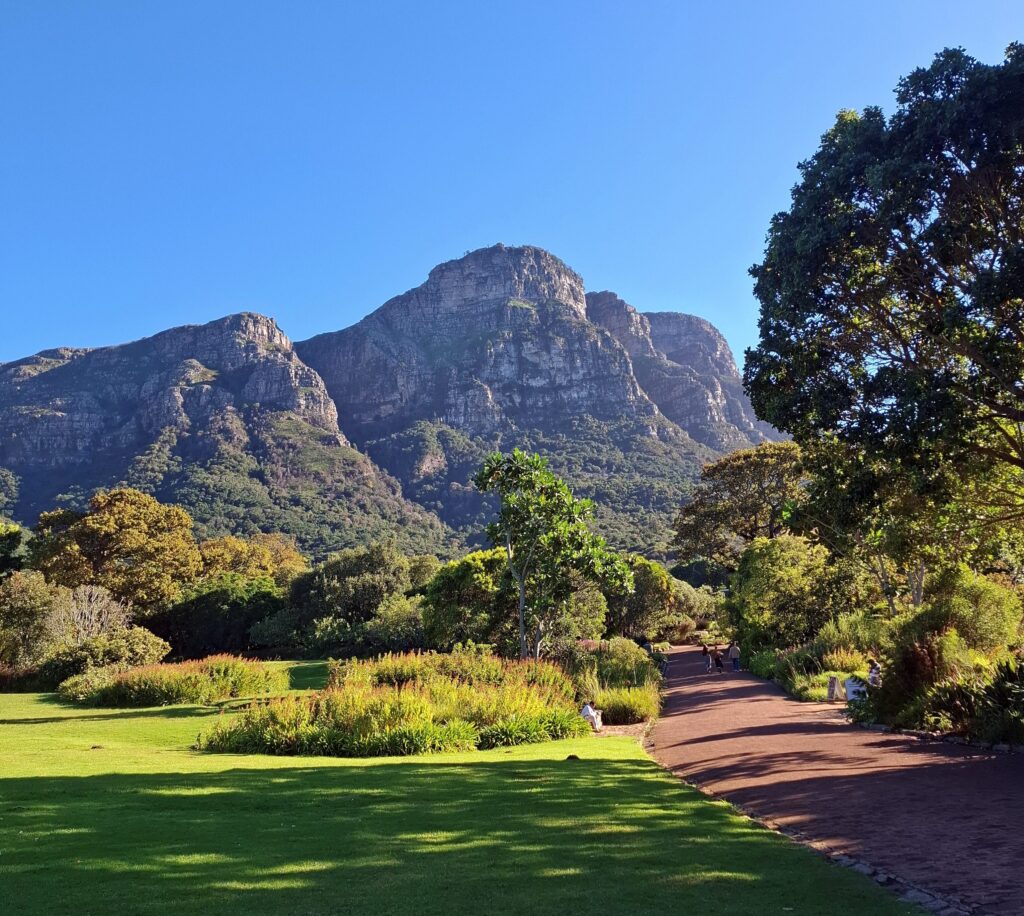
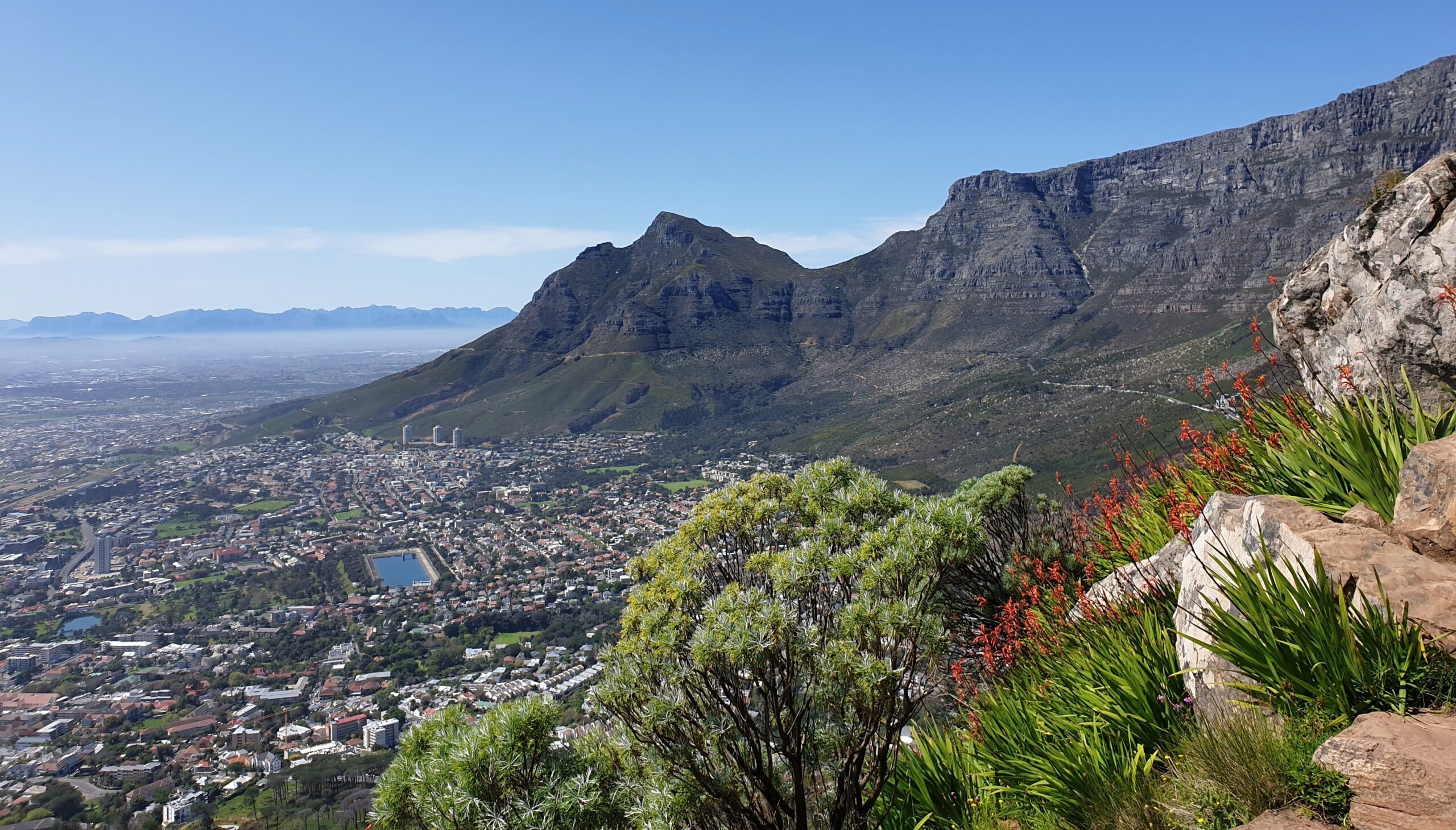
Cape Town sits at the south-western tip of Africa, between the Atlantic Ocean and the Cape Peninsula mountains. For a conference on citizen science and water, it provides a rich, living urban landscape of water resilience and participatory governance.
Weather and what to pack
Late June and early July fall in Cape Town’s winter rainy season. Expect cool, changeable weather, with daytime temperatures typically around 16 °C to 19 °C and nights falling to around 7 °C to 10 °C. Winter cold fronts bring spells of rain and strong wind, often followed by clear, crisp days. Newlands lies on the wetter side of the city, close to the mountain.
Pack warm layers, a waterproof jacket, and shoes that can handle rain. The conference venue is air-conditioned, but many South African buildings have limited indoor heating, so a warm layer is useful indoors too. Days are relatively short at this time of year: the sun rises at about 07:50 and sets at about 17:45.
Water
Tap water in Cape Town is safe to drink. Capetonians have kept their water-wise habits since the drought, and we invite delegates to bring a refillable bottle and manage their water use in the city wisely.
Money and tipping
South Africa’s currency is the South African rand (ZAR, written R). Bank cards and contactless payments are widely accepted and carrying cash is not advised. Tipping 10% to 15% is customary in restaurants, usually manually added to your bill (e.g., if your bill is R100, tell the server to make it R115 and then pay).
Power, time, and connectivity
South Africa uses 230 V, 50 Hz electricity. Most sockets take the large three-pin Type M plug, and newer Type N sockets also accept two-pin European (Type C) plugs, so bring a universal adaptor. Scheduled national power cuts (load shedding) have been largely absent since 2025.
South Africa Standard Time (SAST) is two hours ahead of Coordinated Universal Time (UTC+2), with no daylight saving. Local SIM cards and eSIMs are sold at the airport and in shopping centres; bring your passport, which you will need to register a SIM card. Wi-Fi is available in most accommodation, restaurants, and public spaces (including airports), and will be available in the conference venue.
Health and insurance
Cape Town lies outside South Africa’s malaria areas. Beyond any yellow fever certificate required for entry (see Visa and entry requirements below), consult your doctor or a travel clinic about routine vaccinations before you travel. We strongly recommend comprehensive travel insurance that includes medical cover, as private hospitals may ask for proof of insurance or payment on admission.
Emergency numbers
| Service | Number |
|---|---|
| Any emergency, from a mobile phone | 112 |
| City of Cape Town emergency line, from a mobile phone | 021 480 7700 |
| City of Cape Town emergency line, from a landline | 107 |
| South African Police Service (SAPS) | 10111 |
| Ambulance | 10177 |
We recommend that you save these numbers on your phone before you arrive.
Getting around Cape Town
We recommend the e-hailing apps Uber and Bolt for getting around. Both operate across the city and from designated pick-up zones at the airport, and they offer a convenient, reasonably priced way to travel between your accommodation, the venue, and the city. Download at least one app and set up payment before you travel. A few habits make every trip safer:
- Only use drivers booked through the verified app. Do not use drivers asking for cash, and do not use drivers who say they are with Uber or Bolt but do not use the app.
- Check that the registration plate, vehicle, and driver match the details in the app before you get in.
- Share your trip with a colleague or friend through the app.
- Wait for your ride indoors or in a busy, well-lit place.
- Do not wait for your ride alone on the street, especially at night, and keep your phone out of sight.
Airport transfers and car hire
Many hotels and guesthouses offer airport transfers, and shuttle companies operate from the airport; book ahead if you arrive late at night. If you hire a car, remember that South Africans drive on the left. Keep to the main highways (the N2 and M3) and the signposted airport approach road when travelling to and from the airport. PLEASE NOTE: If you intend to self-drive from the airport or around Cape Town and you are not familiar with South Africa, contact info@cs4water.net for tips to help make your travel safe and reliable.
Public transport and walking
Cape Town’s commuter trains (Metrorail) and minibus taxis carry many local residents, but their routes, timetables, and payment systems can be difficult for first-time visitors to navigate. We advise delegates to use e-hailing or pre-booked transport, especially after dark. Newlands and Claremont are pleasant to explore on foot along main roads in daylight; after dark, use e-hailing even for short distances.
Staying safe in Cape Town
Cape Town is a welcoming city, and a few sensible precautions will help you enjoy it safely. As in many large cities, crime rates are high in some areas, and opportunistic theft of phones, bags, and valuables also affects visitors. The following advice reflects what local residents do every day:
- Keep phones, laptops, cameras, and jewellery out of sight in public, and lock bags in the boot when you park. Double check your car is locked, and never leave valuables visible in the cabin of a car (preferably don’t leave valuables in your car at all).
- After dark, travel by Uber, Bolt, or pre-booked transport, even for short distances, and walk in groups.
- Withdraw cash from ATMs inside banks, shopping centres, or hotels during daylight, decline offers of help from strangers at ATMs, and keep your card in sight when you pay.
- Muggings have occurred on quieter trails in Table Mountain National Park. Hike in groups on popular, marked routes, tell someone your plans, and check the weather first, as mountain conditions change quickly in winter.
- When driving, keep doors locked and windows closed, and park in secure, well-lit areas.
- Book accommodation through established platforms or directly with known providers.
- Check your own government’s travel advice for South Africa before you travel.
If anything goes wrong during the conference, speak to the registration desk or any member of the organising team, who will do their best to assist you. If you want further advice, please reach out to info@cs4water.net. Our Code of Conduct sets out the behaviour we expect from everyone and how to raise a concern.
Where to stay
Cape Town offers accommodation for every budget, from guesthouses and self-catering apartments to large hotels. Staying in the Southern Suburbs keeps your daily journey to the venue short, while the city centre and Atlantic Seaboard offer the widest choice of restaurants and attractions with a longer commute. Driving times below are approximate and assume light traffic.
| Area | Drive to venue | What to expect |
|---|---|---|
| Newlands | Under 5 minutes | Leafy and quiet, with hotels and guesthouses near the sports grounds |
| Claremont | 5 to 10 minutes | Busy commercial hub with hotels, apartments, Cavendish Square shopping centre, and many restaurants |
| Rondebosch | 5 to 10 minutes | University neighbourhood around the University of Cape Town, with guesthouses and budget-friendly options |
| Kenilworth | About 10 minutes | Residential suburb with guesthouses and self-catering options |
| Constantia | 15 to 20 minutes | Wine estates and boutique accommodation in green surroundings; a car or e-hailing is essential |
| City centre, Gardens, and Tamboerskloof | 20 to 35 minutes | Lively central neighbourhoods with the widest choice of restaurants, galleries, and nightlife |
| V&A Waterfront, Green Point, and Sea Point | 25 to 45 minutes | Waterfront and seafront hotels close to major attractions, with the longest daily commute |
Wherever you stay, choose accommodation with secure parking or a 24-hour reception, and plan how you will travel to the venue each morning.
Visa and entry requirements
Delegates are responsible for checking the entry requirements that apply to them and for obtaining any visa or travel authorisation they need. Requirements depend on your nationality and change from time to time, so please confirm them with official sources well before you book travel.
Please note that the information below is advice only. It is each delegate’s full responsibility to ensure that they follow their visa and travel requirements as required.
Do I need a visa?
Nationals of many countries, including the United Kingdom, the United States, and most European countries, may generally visit South Africa without a visa for up to 90 days, and some nationalities may visit visa-free for up to 30 days. Check whether your country appears on the Department of Home Affairs (DHA) list of visa-exempt countries before you plan your trip.
If you need a visa, apply for a visitor’s visa through the South African embassy, high commission, or consulate that serves your country of residence; in many countries, applications are lodged through an external service provider. Visitor’s visas must be issued before you travel, so apply at least three months before your departure date. When you apply, give attendance at the CS4Water Conference 2027 as the purpose of your visit.
Electronic Travel Authorisation (ETA)
South Africa is introducing an Electronic Travel Authorisation (ETA), an online alternative to the traditional visitor’s visa for eligible nationalities. The system is being extended to more countries in phases, and visa-exempt travellers may also apply voluntarily for faster processing on arrival at participating airports, including Cape Town International Airport. A processing fee applies. Check the official ETA portal at eta.dha.gov.za to see whether you are eligible, and apply only through that portal.
Passport, health, and customs requirements
- Your passport must remain valid for at least 30 days after the date you leave South Africa and must contain at least two blank visa pages; pages reserved for endorsements or amendments are excluded. Travellers without these may be refused entry.
- Carry proof of your return or onward travel.
- If you are travelling from, or transiting through, a country with risk of yellow fever transmission, you must present a valid yellow fever vaccination certificate. The vaccine must be given at least 10 days before you arrive.
- PLEASE NOTE: Since 1 July 2026, everyone entering or leaving South Africa must complete a Customs Online Traveller Declaration with the South African Revenue Service (SARS), no more than 24 hours before the final flight to South Africa departs.
Letters of invitation
Registered delegates who need a letter of invitation to support a visa application can generate one in Dryfta once their registration is confirmed and paid. If you need a visa, we recommend registering as soon as registration opens on 1 February 2027, to leave enough time for your application. To download your letter:
- Log in to your account on the CS4Water Conference 2027 Dryfta platform.
- Click your name in the top right-hand corner to open the drop-down menu.
- Select ‘Profile Overview’.
- Select ‘Generate Visa Letter’ and save the PDF.
The letter confirms your registration and the conference dates. Visa decisions rest solely with the South African authorities. Registration fees are non-refundable if a visa application is refused, so please apply as early as possible (see Cancellation and refunds).
Cancellation and refunds
Registration fees, networking dinner tickets, and field excursion tickets are non-refundable, including when a delegate cannot attend because of a visa refusal, illness, or a change of plans. If the conference itself must be cancelled because of circumstances beyond the organisers’ control (force majeure), we will refund all registration fees and dinner and excursion tickets to every registered delegate. Bank and payment-processing charges will be deducted from these refunds.
If you can no longer attend, you may transfer your registration, together with any dinner or excursion tickets, to a colleague in the same registration category (e.g., student to student transfer). Email info@cs4water.net with your name and your colleague’s details by 4 June 2027.
Refunds cover registration fees only, so we recommend travel insurance that covers trip cancellation for your travel, accommodation, and visa costs. Sponsors’ cancellation terms are set out in their individual sponsorship agreements.

Frequently asked questions
About the conference
Where will the conference be held?
The CS4Water Conference 2027 will take place on the sixth floor of The Quadrant Building, Emeris Newlands Campus, 146 Campground Road, Newlands, Cape Town, South Africa. See Venue above for travel and accessibility information.
Can I get a refund if I can’t attend?
Registration fees and dinner and excursion tickets are non-refundable, but you can transfer your place to a colleague. Refunds apply only if the conference itself is cancelled. See Cancellation and refunds above for details.
Is the venue accessible by wheelchair?
Yes. The Emeris Newlands Campus and the sixth-floor venue, where the whole conference will take place, are wheelchair accessible, with lifts serving the sixth floor. Please tell us about any accessibility requirements when you register, or email info@cs4water.net, so that we can make arrangements.
Can I attend or present online?
The CS4Water Conference 2027 runs fully in person, with all contributions presented on site in Cape Town. Online attendance and livestreaming are outside the scope of the 2027 edition.
Who organises the CS4Water Conference?
The conference is co-organised by IHE Delft Institute for Water Education (Chair), GroundTruth (Conference Coordinator), Emeris (Host), Pulsaqua, Earthwatch Europe, the Citizen Science Association for Southern Africa (CSA_SA), University of the Western Cape (UWC), and the UNESCO Intergovernmental Hydrological Programme (IHP) with support from the Government of Flanders. Meet the team on our Organisers & Partners page.
What is the timeline towards the CS4Water Conference 2027?
The call for contributions opens on 31 October 2026 and closes on 14 December 2026. Authors receive decisions before 1 February 2027, when early bird registration also opens. See Key dates above for the full timeline.
Contributions and programme
How do I submit a contribution?
Submit your contribution through the Dryfta platform between 31 October and 14 December 2026. The call for contributions page sets out the conference themes, contribution formats, and submission guidelines.
Where can I find the conference programme?
We will publish a draft outline programme on 15 February 2027 and the full programme on 10 June 2027, both on this website and in Dryfta.
My contribution has been accepted. How can I prepare?
Congratulations. Register for the conference before the regular registration deadline on 3 May 2027 to secure your place in the programme. Contributions whose presenting author or lead has not registered by 8 June 2027 will be removed from the programme. If you need a visa, start your application as soon as you have registered (see Visa and entry requirements). We will send presenter guidelines covering session formats, poster dimensions, and slide deadlines, and your session chair will contact you before the conference.
Will there be financial support, sponsorship, or travel grants available for attendance?
The conference offers no travel grants, accommodation support, per diems, or other financial support for attendance. However, in an effort to increase inclusivity and accessibility, reduced registration fees apply for delegates based in the Global South, students, and practitioners, with all fees published when registration opens. We encourage all attendees to reach out to their faculty grant advisors or networks to find out about conference travel and attendance support; many universities and national governments offer conference travel support grants.
Registration
Will single-day registration be available?
We will confirm all registration options, including any single-day registration, when registration opens on 1 February 2027.
Are reduced registration fees available?
Reduced registration categories are planned for students, practitioners, and delegates based in the Global South. Full details will be published when registration opens.
Will I receive an invoice for my registration?
Dryfta issues an automatic payment confirmation when you pay online. If your institution needs a formal invoice before paying, request one from info@cs4water.net or through Dryfta where available. GroundTruth issues the invoice on behalf of the CS4Water Conference, and your registration is confirmed once payment by electronic funds transfer (EFT) clears.
Do registration fees include VAT?
Fees are set in euros, and South African value-added tax (VAT) of 15% is added at checkout.
Can I claim back VAT when I leave South Africa?
If you hold a foreign passport, you can claim back the 15% VAT on goods you buy in South Africa and take home with you, such as crafts, books, or equipment, provided your total VAT-inclusive purchases come to more than R250. The scheme covers goods only, so it does not apply to your registration fee, dinner or excursion tickets, accommodation, meals, or transport. When you buy, tell the shop you are a visitor and ask for a full original tax invoice showing your name and address, a description of the goods, the invoice number, and the VAT amount. When you leave, take the goods and invoices to the VAT Refund Agency desk at Cape Town International Airport, or another designated departure point, before you check in, so that the items can be inspected. Goods must leave South Africa within 90 days of the invoice date. Please confirm the details before you travel with the VAT Refund Agency and the South African Revenue Service (SARS).
Do I need to sign up for individual sessions?
Your registration covers all plenary, parallel, and poster sessions. The field excursions and networking dinner are ticketed separately, and places are limited, so book them when you register.
Why does registration ask about my age group, gender, and career stage?
These questions are optional, and every question offers a ‘Prefer not to say’ option. Your answers help us report to our funders and partners on who the conference reaches, including how many countries, students, young people, women, and Global South delegates take part. We publish only anonymised totals and percentages. See our Privacy Policy for details.
Is there a code of conduct?
Yes. Everyone taking part in the CS4Water Conference 2027 is asked to follow our Code of Conduct, which also explains how to raise a concern.
Travel
Do I need a visa to attend?
That depends on your nationality. See Visa and entry requirements above, which gives advice on visa exemptions, the Electronic Travel Authorisation, and how to download a letter of invitation from Dryfta. Please note travel arrangements and visa requirements are fully the responsibility of each delegate.

Designed with WordPress